
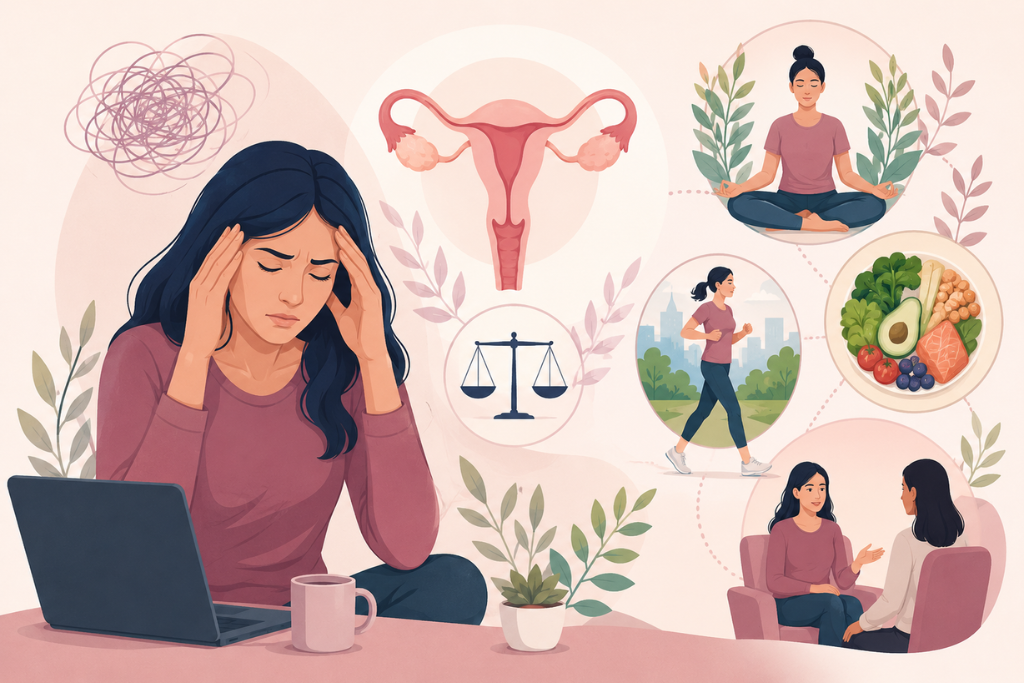
People do not think that infertility is a physical problem only, and emotional and mental well-being are equally significant. Stress is one of the most neglected aspects that influences the conception capability of a woman. Stresses over a long period of time may cause hormonal imbalance in the body, which directly has a reflection on the reproductive health.
The Effect of Stress on Hormones.
The body releases more cortisol in the state of stress, which is also referred to as the stress hormone. Although cortisol is needed in low quantities, high levels of cortisol constantly disrupt other hormones that are involved in ovulation.
The reproductive system is reliant on a fine balance between hormones such as estrogen, progesterone and luteinizing hormone. This balance may be broken by stress, which is chronic, resulting in irregular menstrual cycles or even skipped ovulation. In other instances, it is termed stress-induced anovulation.
Effect on Ovulation and Menstrual Cycle.
An ovulatory period is one of the indicators of good health. Nonetheless, stress may delay or even prevent ovulation. Women may notice:
- Irregular periods
- Missed cycles
- Variation of flow or time.
The changes also complicate the forecasting of fertile windows, thus decreasing the likelihood of conception. Studies indicate that women who are highly stressed may take a long time to conceive compared to women who have a lower level of stress.
Emotional Stress and Lifestyle Factors.
Stress does not necessarily arise out of significant life events. Even such daily stresses as work deadlines, relationship issues or even the anxiety of getting pregnant can play a role. This emotional tension may eventually cause sleeplessness, an unhealthy diet, and decreased physical exercise, all of which also influence fertility.
In this regard, it can be consulted with an infertility specialist in South Delhi or the most suitable fertility specialist in Delhi and determine whether a hormonal imbalance is associated with stress.
Stress Management and Successfully Having a Baby.
Dealing with stress is a significant milestone towards improving reproductive health. Some of the following methods can achieve it:
- Doing mindfulness or meditation.
- Physical exercise, such as yoga or walking.
- Eating a well-balanced diet.
- Essentially, seeking emotional support or counselling.
It has been documented that stress-reduction methods can be used to enhance hormonal balance and increase the likelihood of natural conception.
When to Seek Medical Assistance?
When the irregularities in cycles or with fertility issues continue, then one should consult the most suitable gynaecologist in South Delhi or the most suitable fertility doctor in Delhi. An appropriate assessment can be used to establish whether the stress is influencing the level of hormones or if there are other underlying factors.
The knowledge of the relationship between stress and fertility will enable women to take care of their psychological and physical well-being. The appropriate treatment of stress at an early age will greatly enhance reproductive and general health.
Conclusion
For patients in need of professional help, Dr Pooja Bajaj Wadhwa is a comprehensive and understanding professional who can help them find the right way to overcome infertility and navigate the process with clarity and confidence.