
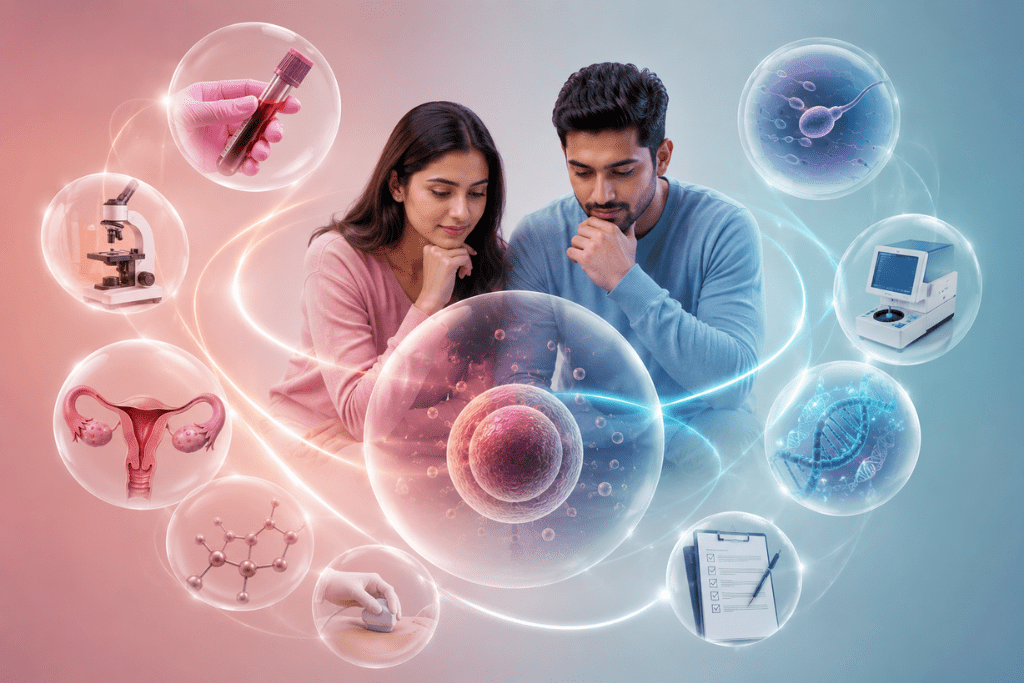
Planning for a baby is an exciting step, but for many couples, understanding their fertility health before trying to conceive can make the journey smoother. Fertility testing helps identify potential issues early and allows couples to make informed decisions about natural conception or fertility treatment. Whether you are considering pregnancy soon or exploring IVF in the future, these fertility tests can provide valuable insights.
Why Fertility Testing Matters
Studies suggest that around 10-15% of couples experience fertility challenges at some point. Fertility tests help assess reproductive health in both partners and can detect conditions that may affect conception. Early testing can save time and reduce emotional stress if fertility concerns are present.
Hormone Testing for Women
Hormone testing is one of the most common fertility tests. Blood tests measure hormones such as Follicle-Stimulating Hormone (FSH), Luteinizing Hormone (LH), Anti-Müllerian Hormone (AMH), and thyroid hormones.
These results help doctors evaluate ovarian reserve, ovulation patterns, and overall reproductive health. Hormone testing is often recommended before starting fertility treatment or IVF.
Ovulation Assessment
Regular ovulation is essential for natural conception. Ovulation assessment may include blood tests, ultrasound monitoring, or ovulation tracking methods.
This fertility test helps determine whether the ovaries are releasing eggs regularly and identifies hormonal imbalances that could affect pregnancy chances.
Semen Analysis
Male fertility plays a role in nearly half of all infertility cases. A semen analysis evaluates sperm count, motility, shape, and overall sperm health.
This simple fertility test is usually one of the first investigations recommended for couples trying to conceive. It helps identify male-factor infertility and guides appropriate fertility treatment options.
Pelvic Ultrasound Scan
A pelvic ultrasound provides a detailed view of the uterus and ovaries. It helps detect conditions such as ovarian cysts, fibroids, polyps, or structural abnormalities that may interfere with conception.
Ultrasound scans are commonly used during fertility evaluation and IVF planning.
Fallopian Tube Testing
Healthy fallopian tubes are necessary for fertilization. A test known as Hysterosalpingography (HSG) checks whether the fallopian tubes are open and functioning properly.
Blocked tubes can prevent pregnancy and may influence decisions regarding fertility treatment or IVF procedures.
Genetic Screening
In some cases, doctors may recommend genetic testing before conception. Genetic screening helps identify inherited conditions that could affect pregnancy outcomes or be passed on to a child.
This test is particularly useful for couples with a family history of genetic disorders.
Conclusion
Fertility testing provides important information about reproductive health and can help couples understand their chances of conception. From hormone testing and semen analysis to ultrasound scans and fallopian tube evaluation, these investigations support timely diagnosis and effective fertility planning.
For couples seeking expert guidance on fertility evaluation, IVF, and reproductive health, Dr. Pooja Bajaj Wadhwa offers evidence-based care and personalized consultation to help individuals make informed decisions on their parenthood journey.